Water damage restoration in Tallahassee runs $1,000–$8,000. The category of water drives the scope more than the volume does, and drying here is almost entirely mechanical: high ambient humidity and heavy canopy mean neither the air nor the sun assists.
Why category beats volume, what a flood cut is, and why the drying target should be a number rather than a number of days.
Category, not volume, decides the mold removal scope
A larger volume of clean supply water caught within a day is a smaller job than a smaller volume of contaminated water that stood for three. This surprises people consistently.
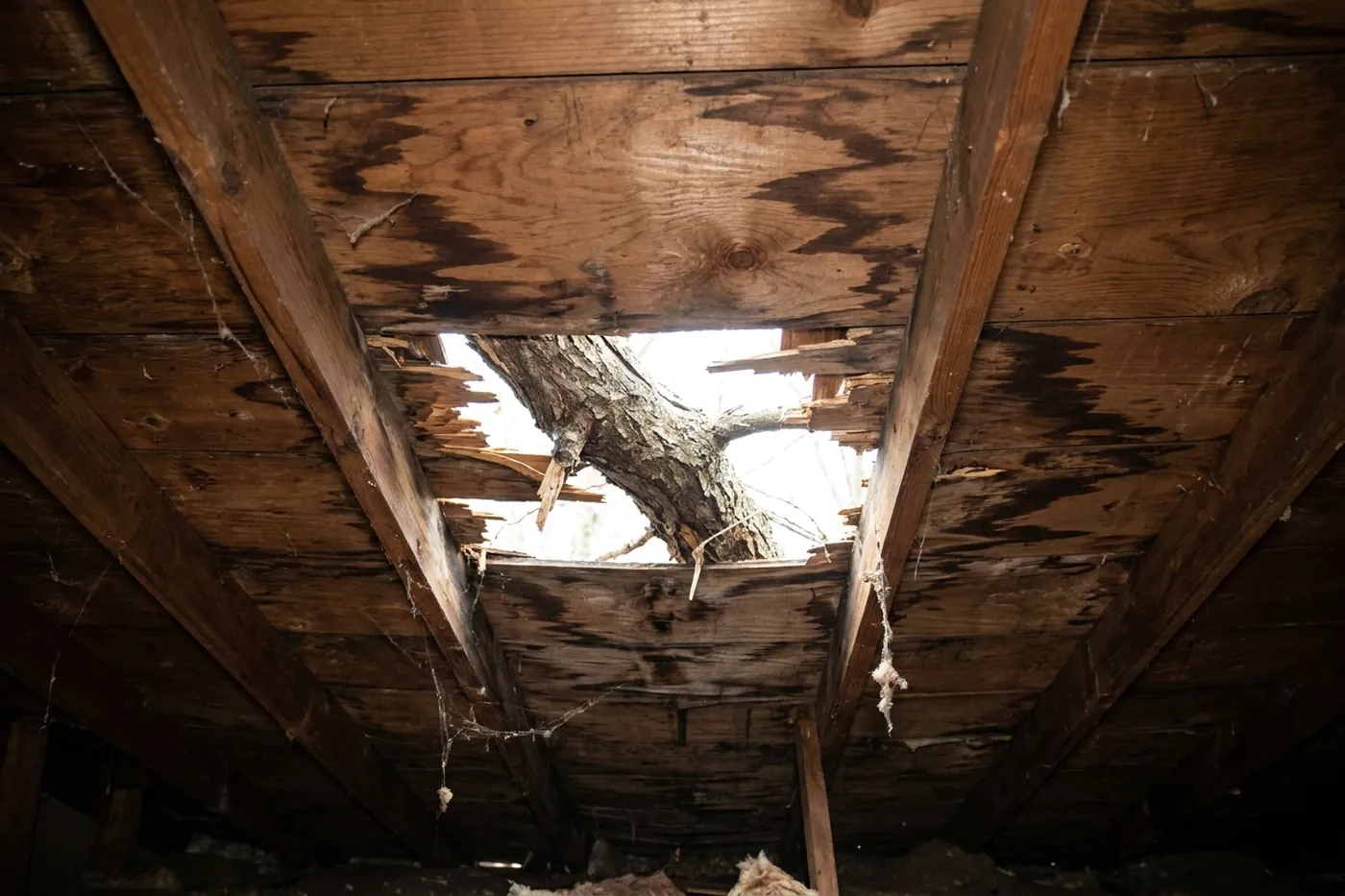
Clean water reached quickly stays a drying exercise: nothing is demolished, the equipment runs to a figure, and the building is put back. Contaminated water flips that entirely. Anything absorbent it reached (board, batt, carpet, underlay) leaves the building, because there is no reliable way to return those materials to a sound condition.
Why drying is harder under this canopy
Two factors compound here. Ambient humidity through most of the year means outdoor air introduced into a wet building adds moisture rather than removing it, so ventilating is not a strategy. And exterior surfaces under mature canopy get very little solar drying assistance, which matters for the envelope even while interior equipment runs.
The practical consequence: dehumidification and air movement are doing all of the work, and the equipment plan is the job. A restoration quote that does not specify what is being run and to what target is not describing a controlled process.
Ask for the target, in numbers
| Ask for | Why it matters |
|---|---|
| Starting moisture readings, by location | Establishes what "wet" meant at the outset |
| The target reading being worked toward | Defines done as a measurement, not a date |
| Final readings before equipment leaves | Proves the target was reached, not approximated |
| What is being removed versus dried | The single largest driver of the price |
| Where the water came from, named | Restoration without it is temporary |
Equipment pulled on day three because it was needed elsewhere, from a structure that had not reached target, is the most common quiet failure in this trade. Written numbers are how you prevent it.
When mold removal needs an assessor first
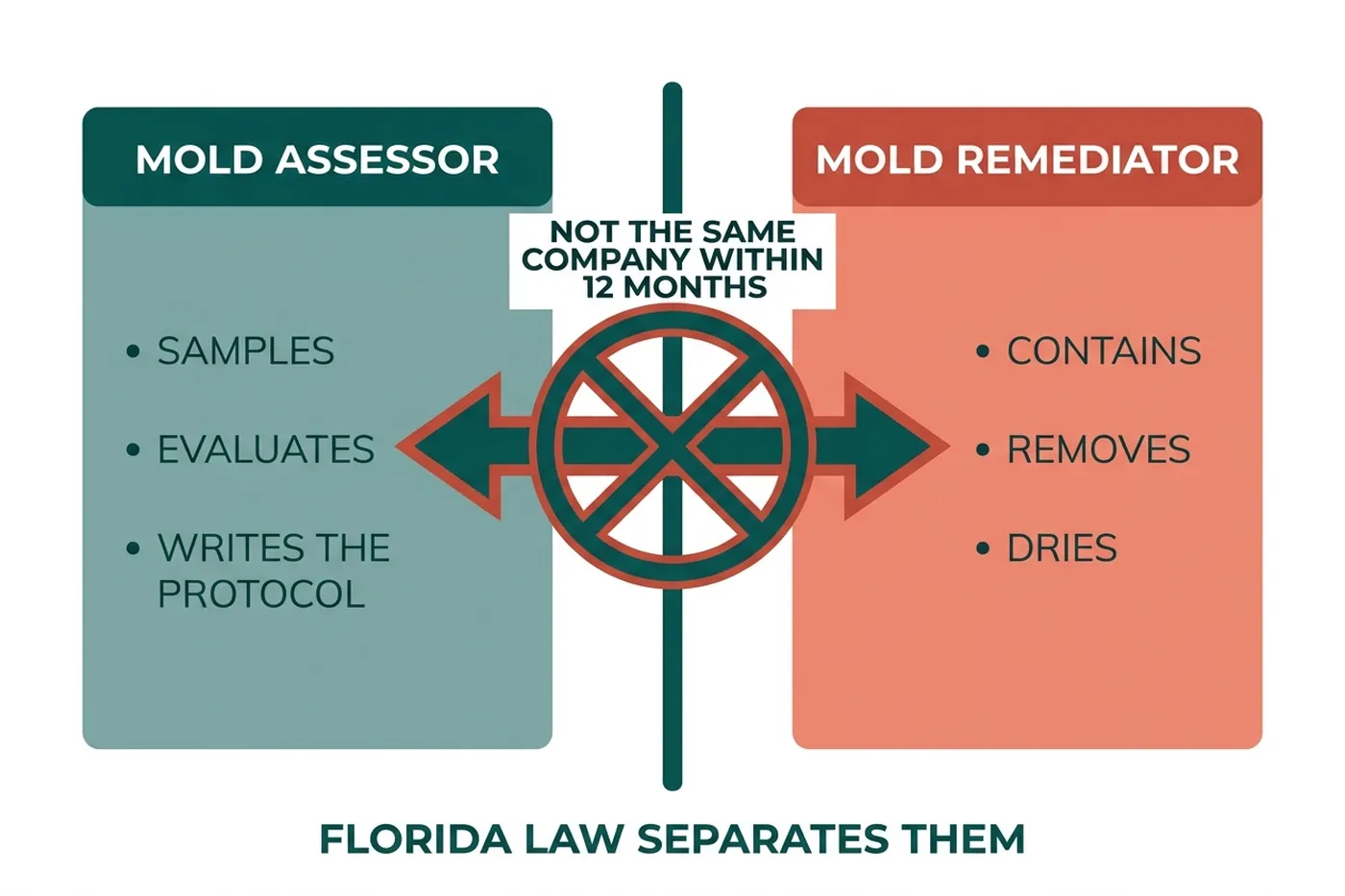
For an insurance claim, or where water stood long enough that growth is likely inside cavities, an independent licensed assessor is worth the fee. Their documentation carries weight a remediator's cannot, because they have no interest in the size of the removal scope, which is the entire reason Florida keeps the two roles apart.
Water damage, in plain terms
What does water damage restoration cost in Tallahassee?
Reckon on $1,000-$8,000. What sets the figure is which kind of water it was, not how much: supply water reached within the day stays a drying exercise, whereas anything that sat, or arrived dirty, means the absorbent materials leave the building.
Why is drying harder here than elsewhere?
Two reasons stack. Ambient humidity is high through most of the year, so opening windows adds moisture rather than removing it. And under canopy, exterior surfaces get little solar assistance. Mechanical dehumidification is doing essentially all the work.
What is a flood cut?
Cutting the wallboard away to a marked height above where the water reached, so the cavity behind it and the insulation inside can be dried or taken out. Homeowners find it alarming and it is routine. Batt insulation stays saturated long after the board surface reads dry, and that gap is precisely where unseen growth starts.
How long should drying take?
Until a meter says so, not until a schedule says so. Equipment run to a measured target rather than a fixed number of days is the difference between a dry structure and a structure that looks dry. Ask for the target readings and the final ones in writing.
Do I need an assessor after water damage?
Often yes, particularly for an insurance claim or if the water sat. An independent assessment documents what happened in a way that a remediator's own paperwork cannot, and Florida's separation is exactly what gives that document its weight.
Get a Tallahassee remediation quote
If you already hold an assessor’s protocol, say so, and the remediator can quote directly against it. If you do not, describe what you have found and roughly how large an area it covers. Ten square feet is the line Florida draws, and knowing which side of it you are on changes what you need next. You get a call back from a local specialist who serves Tallahassee.