Storm and tree damage mold removal in Tallahassee runs $1,000–$8,000. Under a dense live oak canopy a limb through the roof is the most common bulk-water entry here, and mold can begin within 24–48 hours on wet organic material.
Why the canopy is the mechanism, what the first day decides, and why this is the one mold cause insurers usually pay for.
The trees are the mechanism, both ways
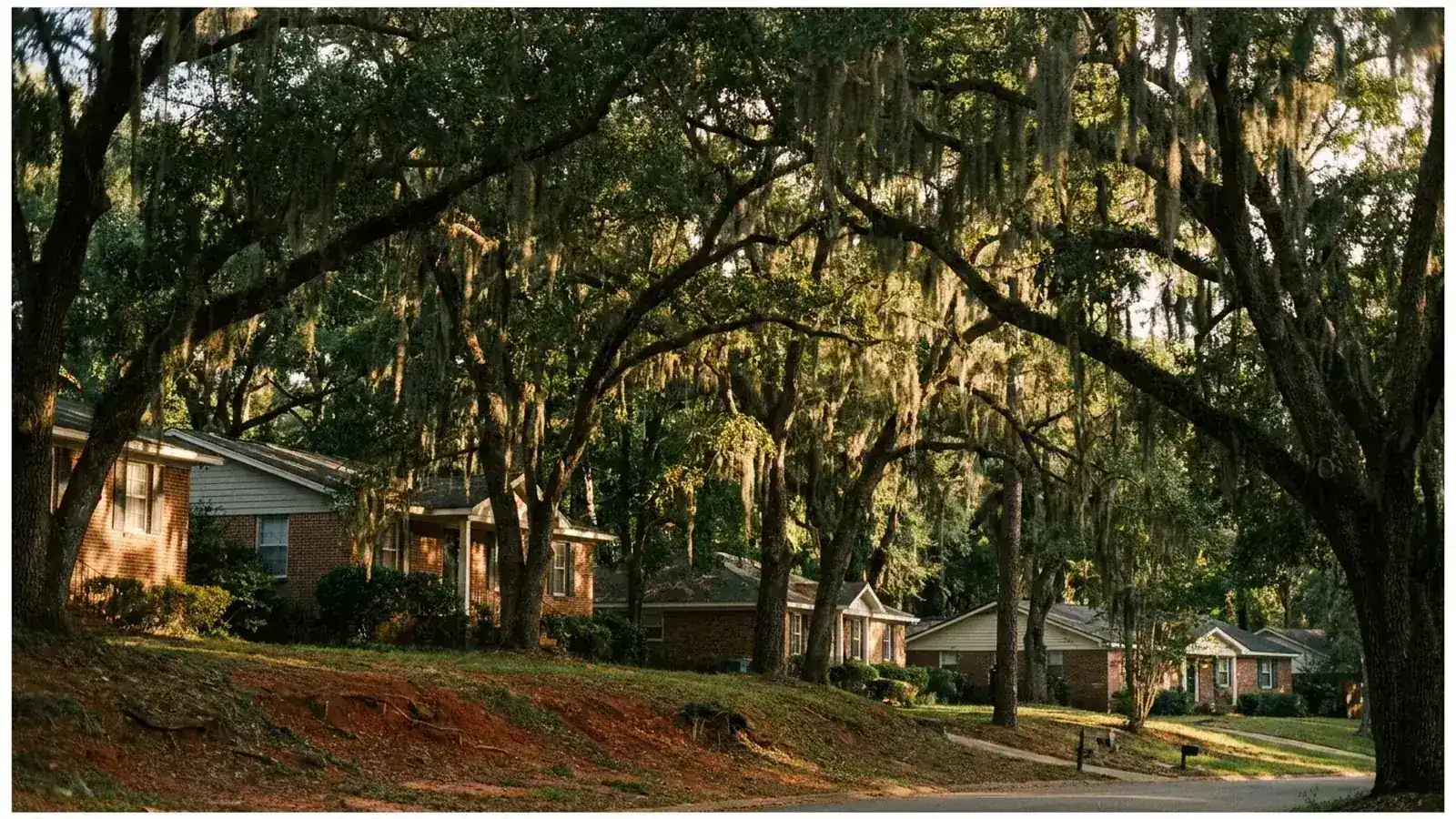
Tallahassee's canopy is genuinely unusual for a city this size, and it shapes moisture in two opposite ways. Day to day it produces shade, which keeps roof planes and walls from drying. That is the slow story, and it belongs on the attic page.
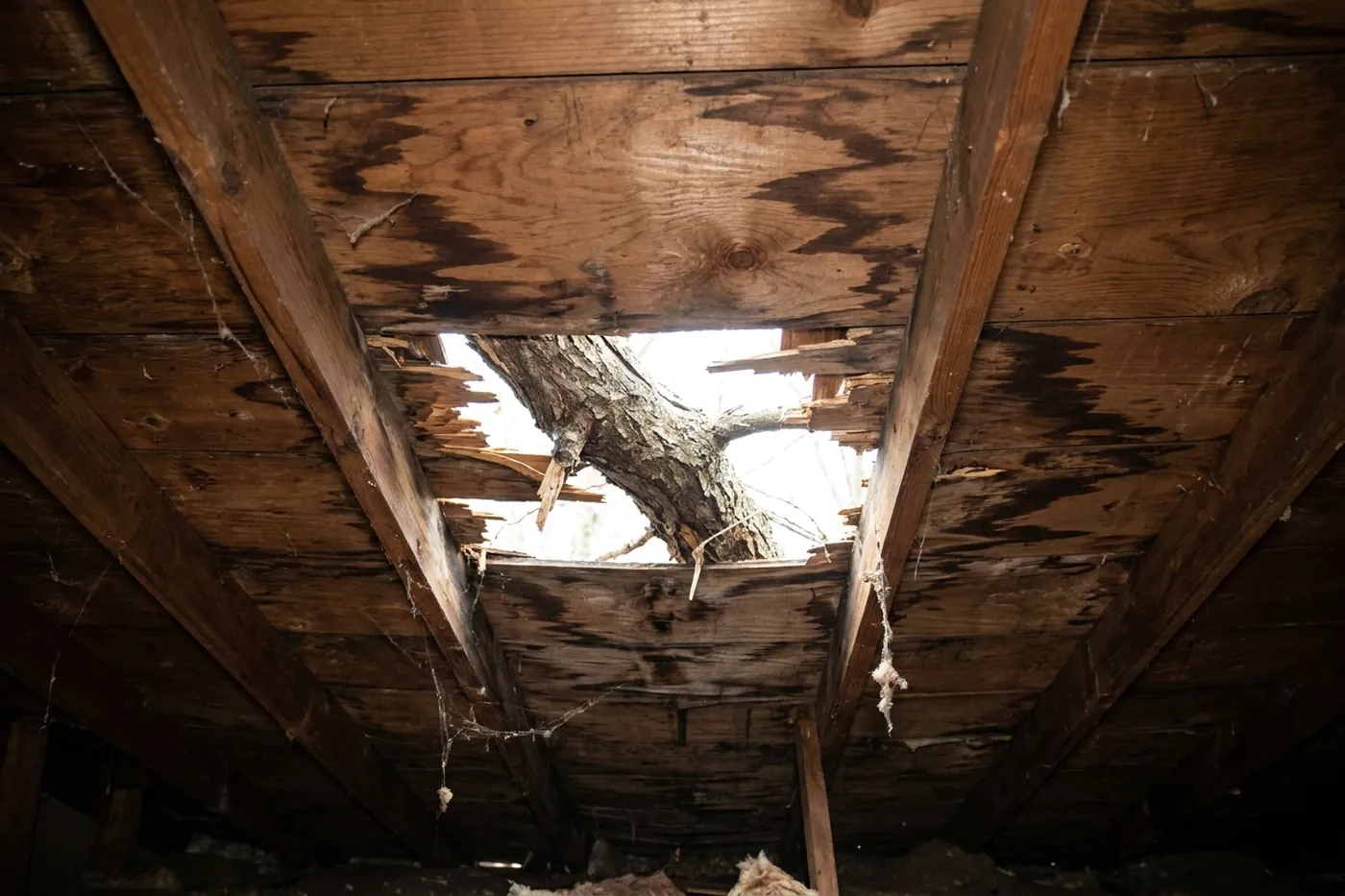
In a storm it produces the fast story. Hurricane Hermine in 2016 and Hurricane Michael in 2018 both brought significant tree damage across this region, and a limb through a roof puts an opening directly above living space. Everything that follows is a race between how quickly the opening gets closed and how much water gets in.
What the first day decides
| Timeline | What is happening | What it becomes |
|---|---|---|
| Hours 0–24, opening covered | Wet materials, no further entry | A drying job, $1,000–$2,500 |
| Hours 24–48 | Growth can begin on wet organic material | Drying plus limited removal |
| Days, opening still open | Continued entry re-wets everything | Removal of saturated porous material |
| Weeks, found later | Growth inside cavities and insulation | Full remediation, $4,000–$8,000 |
Tarping safely from the ground is the single highest-value thing a homeowner can do, and it beats any equipment a crew could bring on day one. Do not climb a storm-damaged roof to do it.
Photograph before anything moves
- The opening itself, from inside and outside where safe
- The water line on each affected wall, dated
- Standing water and saturated contents, individually
- The tree or limb in place, before it is cleared
- Ceiling and insulation condition before anything is pulled
Restoration necessarily destroys this evidence and it cannot be recreated afterward. Ten minutes with a phone is worth more than any argument later, and unlike most mold causes this one is frequently paid.
Why insurers treat this differently
Most mold claims fail because the cause is a condition: humidity, a slow leak, deferred maintenance. Storm damage is an event, and wind is a named peril in standard policies. Water entering through a wind-created opening, and the mold that follows it, sit in a far stronger position than almost anything else on this site.
That does not make it automatic. Prompt reporting and documentation carry it, which is why the photographs matter more here than the arguments do.
Storm damage, in plain terms
What does storm damage mold removal cost in Tallahassee?
Most jobs run $1,000-$8,000 depending on how much water entered and how long it sat before drying started. A limb strike caught the same day is a drying job. The same strike found a week later, after rain has continued through the opening, is a removal job.
How fast does mold start after a tree comes through the roof?
Mold can begin on wet organic material within roughly 24 to 48 hours. In practice the clock that matters is when the opening was covered - water entering continuously through an untarped roof keeps re-wetting material that drying equipment is trying to dry.
Should I tarp it myself?
If you can do it safely from the ground, yes - stopping further entry is worth more in the first day than anything else. Do not go onto a storm-damaged roof. Photograph everything first, including the opening and the water line inside, because that evidence disappears once repairs start.
Is this covered by insurance?
Wind damage and the resulting water entry are commonly covered under a standard homeowners policy as a named peril, which puts tree strikes in a much better position than humidity-driven mold. Report promptly and document before anything is removed.
Does the remediator do the roof repair too?
The remediator handles the water and the mold. The roof itself is a roofing contractor's work, and getting the opening closed usually needs to happen before or alongside drying rather than after it. A good remediator will tell you the sequence plainly and coordinate around it.
Get a Tallahassee remediation quote
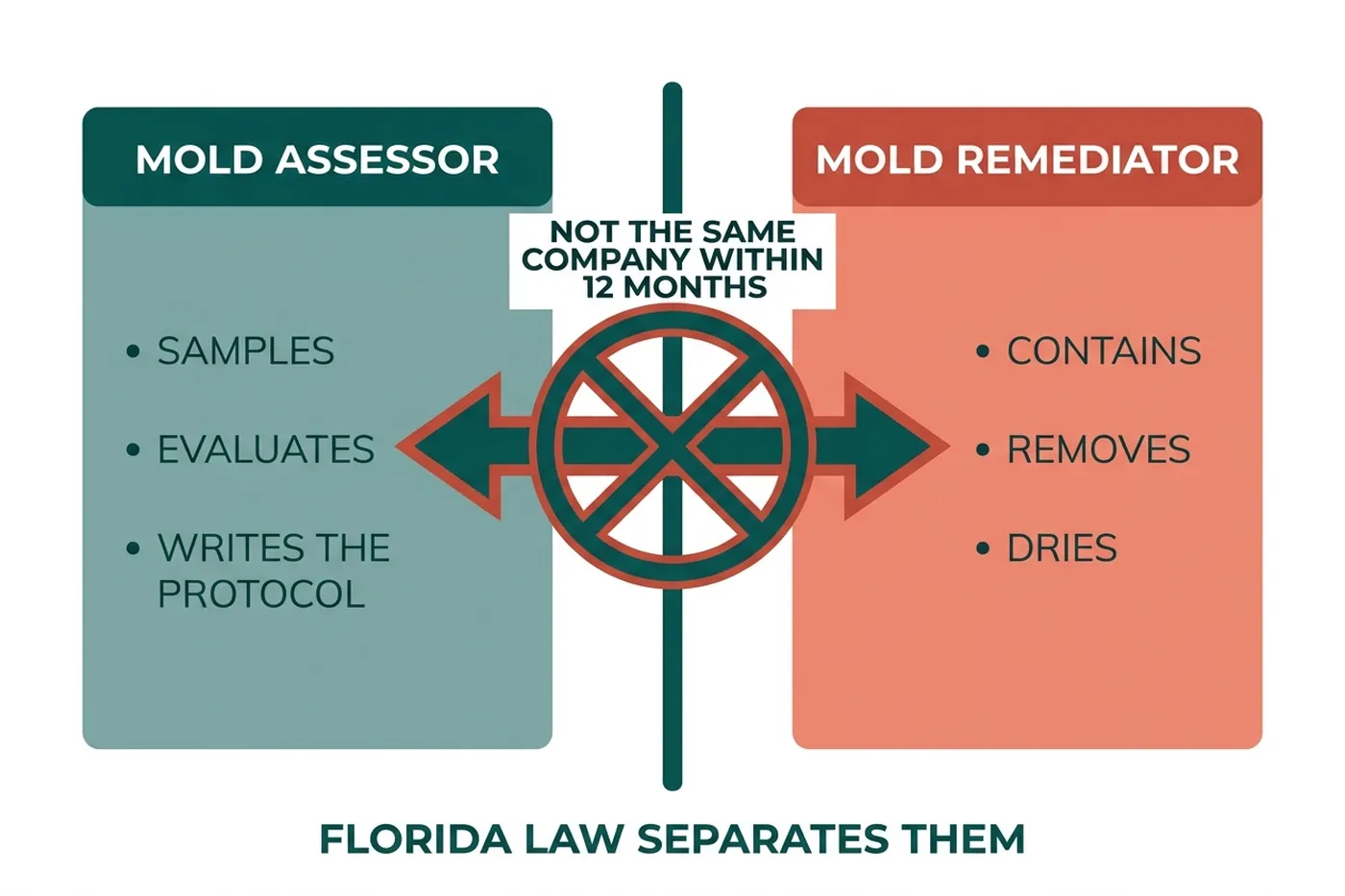
If you already hold an assessor’s protocol, say so, and the remediator can quote directly against it. If you do not, describe what you have found and roughly how large an area it covers. Ten square feet is the line Florida draws, and knowing which side of it you are on changes what you need next. You get a call back from a local specialist who serves Tallahassee.